
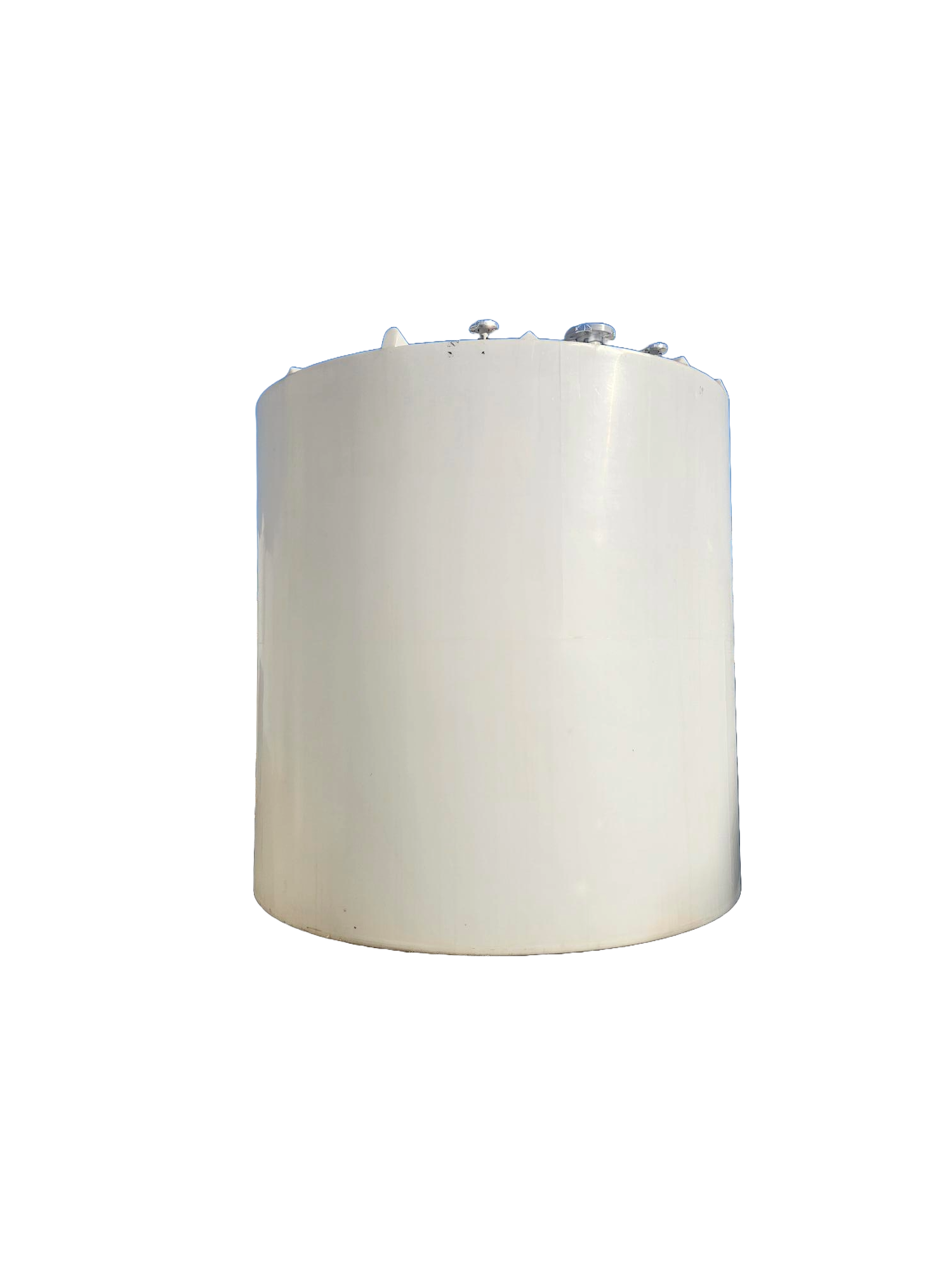
-- Polypropylene Storage Tanks have a continuous use termperature of 200F.
-- Designed for storage of industrial chemicals..
-- Tanks are Outfitted to customer specs with Ansi #150 flanges, NPT couplings, NPT bulkheads and Sanitary Tri-Clamp adapters.
-- Our fabrication department can modifiy our tanks to your needs with thermoplastic welding to DVS standards.
-- Tanks can be heat traced and insulated for cold weather applications.
Tell us what you need. We can almost certainly deliver it to you.
Feature | Polyethylene (HDPE) | Polypropylene (PP) |
|---|---|---|
Temperature Resistance | Up to 120°F (HDPE) | Up to 200°F (PP) |
Autoclavable | ❌ Not suitable | ✅ Can be sterilized via autoclave |
Impact Resistance | High (especially HDPE) | Moderate |
Cost | Lower | Slightly higher |
Weight | Lighter | Slightly heavier |
UV Resistance | Good (with stabilizers) | Good |
SINGLE WALL VERTICAL TANKS:
25-GALLON VERTICAL POLYPROPYLENE TANK 1.9SG – 18 INCH
100-GALLON VERTICAL POLYPROPYLENE TANK 1.9SG – 23 INCH
200-GALLON VERTICAL POLYPROPYLENE TANK 1.9SG – 31 INCH
265-GALLON VERTICAL POLYPROPYLENE TANK 1.9SG – 31 INCH
300-GALLON VERTICAL POLYPROPYLENE TANK 1.9SG – 35 INCH
300-GALLON VERTICAL POLYPROPYLENE TANK 2.2SG – 35 INCH
300-GALLON VERTICAL POLYPROPYLENE TANK 1.9SG – 48 INCH
500-GALLON VERTICAL POLYPROPYLENE TANK 1.9SG – 48 INCH
550-GALLON VERTICAL POLYPROPYLENE TANK 1.9SG – 46 INCH
650-GALLON VERTICAL POLYPROPYLENE TANK 1.9SG – 46 INCH
700-GALLON VERTICAL POLYPROPYLENE TANK 1.9SG – 48 INCH
800-GALLON VERTICAL POLYPROPYLENE TANK 1.9SG – 60 INCH
1000-GALLON VERTICAL POLYPROPYLENE TANK 1.9SG – 60 INCH
1550-GALLON VERTICAL POLYPROPYLENE TANK 1.9SG – 64 INCH
2000-GALLON VERTICAL POLYPROPYLENE TANK 1.9SG – 74 INCH
2000-GALLON VERTICAL POLYPROPYLENE TANK 1.9SG – 102 INCH
2500-GALLON VERTICAL POLYPROPYLENE TANK 1.9SG – 84 INCH
2500-GALLON VERTICAL POLYPROPYLENE TANK 2.2SG – 84 INCH
3000-GALLON VERTICAL POLYPROPYLENE TANK 1.9SG – 95 INCH
3000-GALLON VERTICAL POLYPROPYLENE TANK 2.2SG – 95 INCH
4000-GALLON VERTICAL POLYPROPYLENE TANK 1.9SG – 102 INCH
5000-GALLON VERTICAL POLYPROPYLENE TANK 1.9SG – 95 INCH
DOUBLE WALL VERTICAL TANKS:
100-GALLON VERTICAL DOUBLE WALL POLYPROPYLENE TANK 1.9SG – 31 INCH
200-GALLON VERTICAL DOUBLE WALL POLYPROPYLENE TANK 1.9SG – 35 INCH
265-GALLON VERTICAL DOUBLE WALL POLYPROPYLENE TANK 1.9SG – 35 INCH
300-GALLON VERTICAL DOUBLE WALL POLYPROPYLENE TANK 1.9SG – 48 INCH
550-GALLON VERTICAL DOUBLE WALL POLYPROPYLENE TANK 1.9SG – 48 INCH
650-GALLON VERTICAL DOUBLE WALL POLYPROPYLENE TANK 1.9SG – 48 INCH
700-GALLON VERTICAL DOUBLE WALL POLYPROPYLENE TANK 1.9SG – 60 INCH
1000-GALLON VERTICAL DOUBLE WALL POLYPROPYLENE TANK 1.9SG – 64 INCH
1550-GALLON VERTICAL DOUBLE WALL POLYPROPYLENE TANK 1.9SG – 74 INCH
2000-GALLON VERTICAL DOUBLE WALL POLYPROPYLENE TANK 1.9SG – 84 INCH
2500-GALLON VERTICAL DOUBLE WALL POLYPROPYLENE TANK 1.9SG – 95 INCH
3000-GALLON VERTICAL DOUBLE WALL POLYPROPYLENE TANK 1.9SG – 102 INCH
5000-GALLON VERTICAL DOUBLE WALL POLYPROPYLENE TANK 1.9SG – 102 INCH